8 Back-to-School STEM Activities That Don't Need a Supply Order
Eight hands-on STEM activities for the first weeks of school — from zero-prep icebreakers to your first real engineering project — no supply order required.
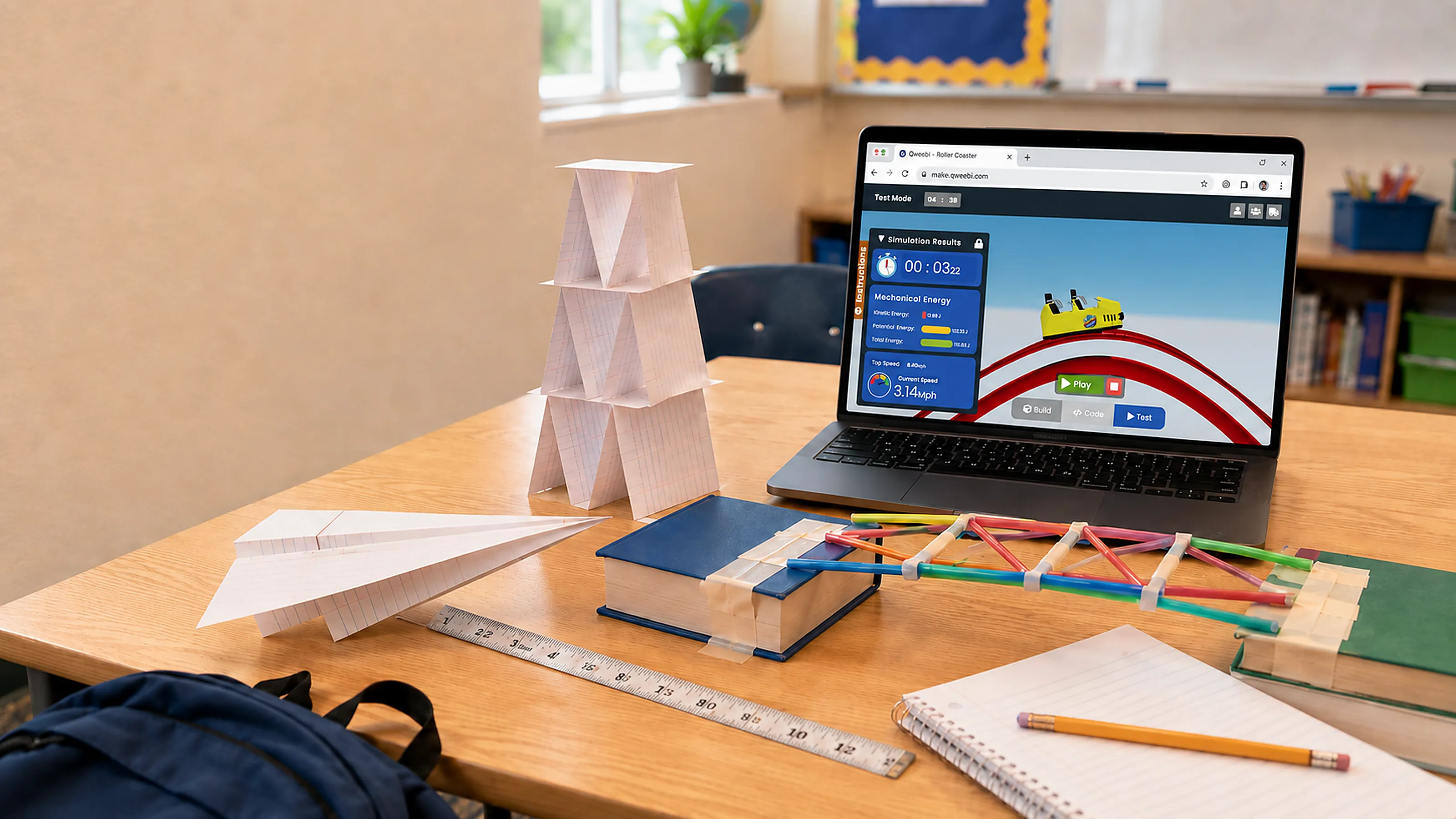
The first weeks of school are a strange time to start something hands-on. Supplies might still be missing or trickling in from summer orders, and your class list may not be fully solidified yet — schedules shift, students transfer in and out, and it can take a week or two before you know exactly who’s sitting at which table, let alone what they’re capable of building. But it’s also the best time to hook students on STEM — first impressions set the tone for the rest of the year. Here are eight activities that work with what you already have, roughly ordered from “right now, zero prep” to “your first real project.”
-
The index card tower challenge. Give each student (or pair) ten index cards and one foot of tape. Challenge: build the tallest freestanding tower in eight minutes. It’s a five-minute setup, it’s loud and fun on day one, and it quietly introduces the engineering design process — plan, build, test, redesign — without ever using that phrase. Works as a true icebreaker since there’s no wrong way to start.
-
The paper airplane distance lab. Everyone folds the same basic design, then everyone gets one redesign attempt based on what they noticed. It’s a real introduction to variables and iteration, using paper you already have. Chart the distances on the board — instant, no-cost data set for a graphing mini-lesson later in the week.
-
A bridge-building team challenge. Classic for a reason: give small groups a stack of drinking straws and a roll of tape, and challenge them to span a 12-inch gap between two desks holding a small toy car’s weight. Cheap, collaborative, and a genuine test of structural thinking — no kit required.
-
Build your STEM vocabulary wall on day one. Not a build activity — a five-minute ritual. Start a running wall of terms as they come up naturally: force, iteration, prototype, constraint. Kids will start reaching for the words themselves within a few weeks, which makes every activity after this one land faster.
-
The “engineer of the day” routine. Pick one student each STEM period to be the point person for questions before they come to you — “ask your table’s engineer of the day first.” Costs nothing, sets a collaborative tone from week one, and gives every kid a turn being the expert.
-
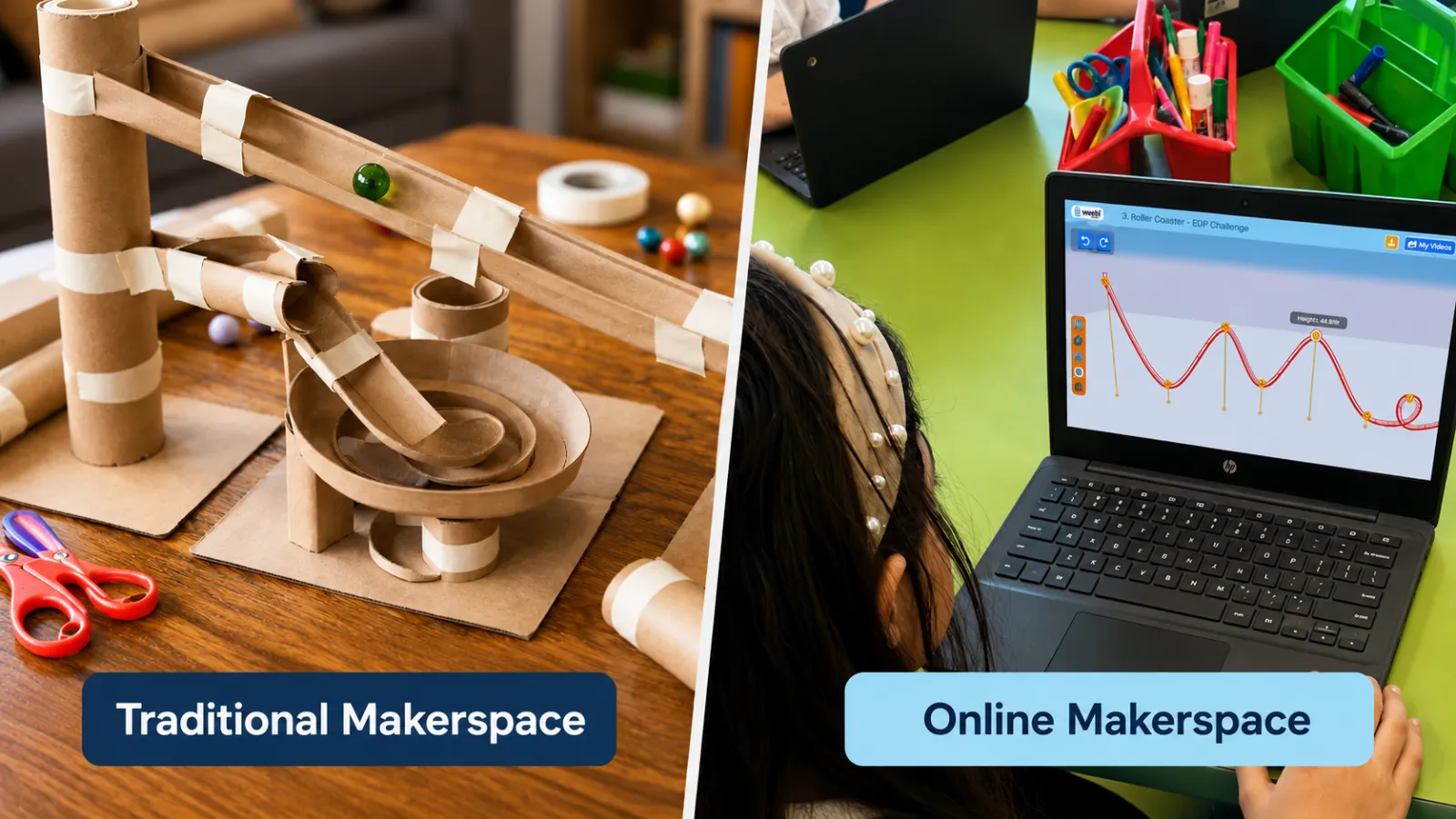
Your first real project: Roller Coaster. Once the first couple weeks settle, it’s worth moving to something with real depth — a project students will return to, not a one-off. Roller Coaster is the easiest Qweebi project to start with: no physical materials, runs on any Chromebook, and it teaches the engineering design process directly — students design, test, watch it fail, and redesign, using real potential and kinetic energy concepts instead of just the vocabulary. It’s also forgiving for a brand-new class: self-paced, works across wide ability ranges, and needs almost no prep from you.
See how it works in a real classroom: Ann Hajost runs it in 30-minute specials periods with 720 students.
-
Once concepts are set: Rube Goldberg. A natural next step after Roller Coaster, once students have the design-test-redesign rhythm down. Rube Goldberg pushes further into simple machines and chain reactions, and pairs especially well with a later hands-on build using classroom materials — several teachers use it as the bridge between virtual design and a real marble-run or domino build.
Read how one teacher runs it, virtual-first then physical: Liz Sisler’s Rube Goldberg unit.
-
End the week with a showcase, not a test. Whatever you ran, close the week by having students present what they built — even 30 seconds each. It sets the expectation early that STEM in your room means making something and explaining your thinking, not filling out a worksheet. If you ran Roller Coaster, this is where Qweebi’s built-in show-and-tell feature does the work for you.
The one thing all of these have in common
None of them wait on a supply order. That’s deliberate — the first few weeks of school are exactly when you have the least control over your budget and the most need to make a strong first impression. Save the big builds for once your classroom rhythm is set; start with what’s already in the room.
Ready to bring hands-on STEM to your classroom?
Try 2 Qweebi projects free and see how students design, build, test, and improve, without kits or supplies.