Built From Nothing: How I Run a K–6 STEM Program for 700 Kids
A rural Florida STEM teacher built a K-6 program from an empty room six years ago. Here's how she runs it, grade by grade, 40 minutes at a time.
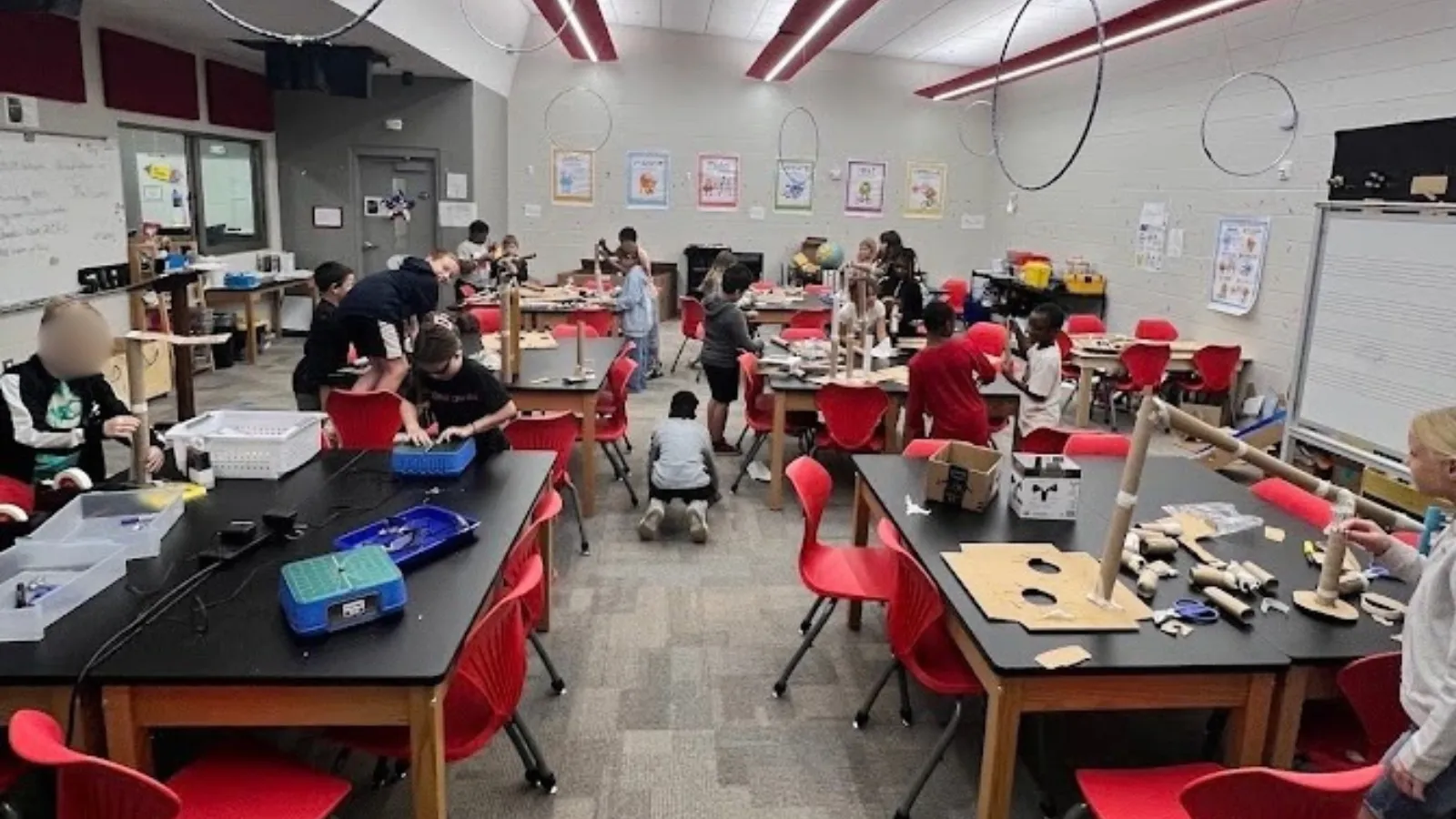
Six years ago I was handed an empty room and asked to build a STEM program. I didn’t even know what STEM stood for. Here’s what I’ve learned since — for any teacher staring at the same blank room.
When they offered me the STEM job, I had to go look up what STEM meant. Six years ago that was a foreign concept to me. I figured somebody knew what it was — I just wasn’t that somebody.
I’d taught ELA and social studies for 12 years, and gifted for six. Then two schools in our county merged, and my principal and superintendent asked if I’d take on a STEM program. It came with nothing. An empty room and 500 students. So I put together an Amazon cart, said “this is what I need — can anybody help me?”, and walked in knowing I was starting from zero.
That was year one. I’m in year six now, teaching about 700 kids in the largest elementary school in a county of 27,000 people.
Year one nearly took me out
That first year was survival. I’ve got burn scars to prove it, and a touchscreen big screen fell on me — I honestly thought this class was going to single-handedly take me out.
Robotics was new to me. Block coding was new to me. Teaching engineering to kindergartners was new to me. I’ve had to be humble about all of it, because I walked in with nothing.
What I did have was one rule, and it’s carried me for six years: try.
Not everybody’s going to be successful. Plenty of what I try blows up in my face. I use NASA with my kids — they didn’t get it right the first 50 times either. But you don’t risk a life until you know it’s safe. So we try, we fail, we try again.
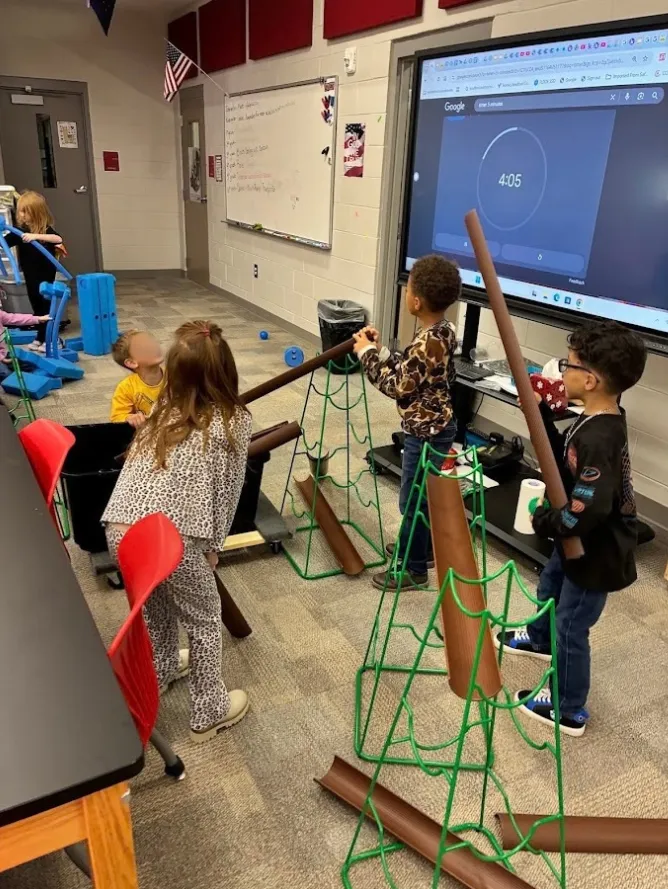 A student’s project mid-build in Lilly Chappell’s STEM classroom.
I run it like a charcuterie board
Here’s how I think about my program: it’s a charcuterie board. The kids get a little taste of everything, and then they figure out what they really like. That’s the job — expose them to as much of the real world as you can.
When you have the same kids for six years, that “taste of everything” turns into a real progression. Here’s how mine builds.
Kindergarten through second grade, I keep them off screens. I don’t put my kids on screens until third grade. In kindergarten we’re building fine motor skills, problem-solving, cooperation. Robotics shows up as a hands-on center with me hovering close by. First graders each get a robot and learn to code with cards — no screens — then we code as a group to race across a letter mat. Let me tell you, the competition to be the first group there is fierce. Second grade adds fairy-tale challenges: solving the problems the characters are stuck with.
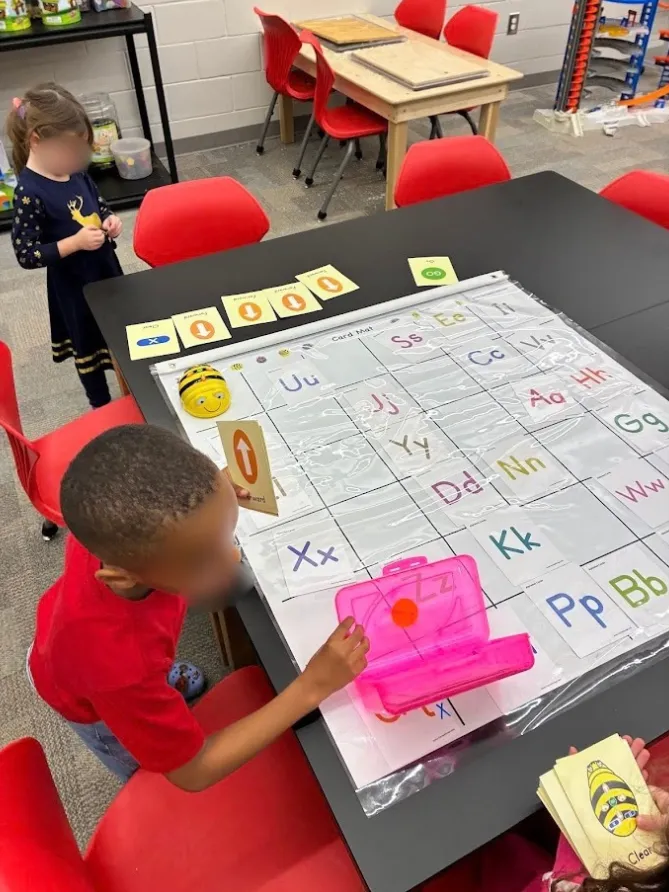 Young students working at a screen-free robotics center in Lilly Chappell’s classroom.
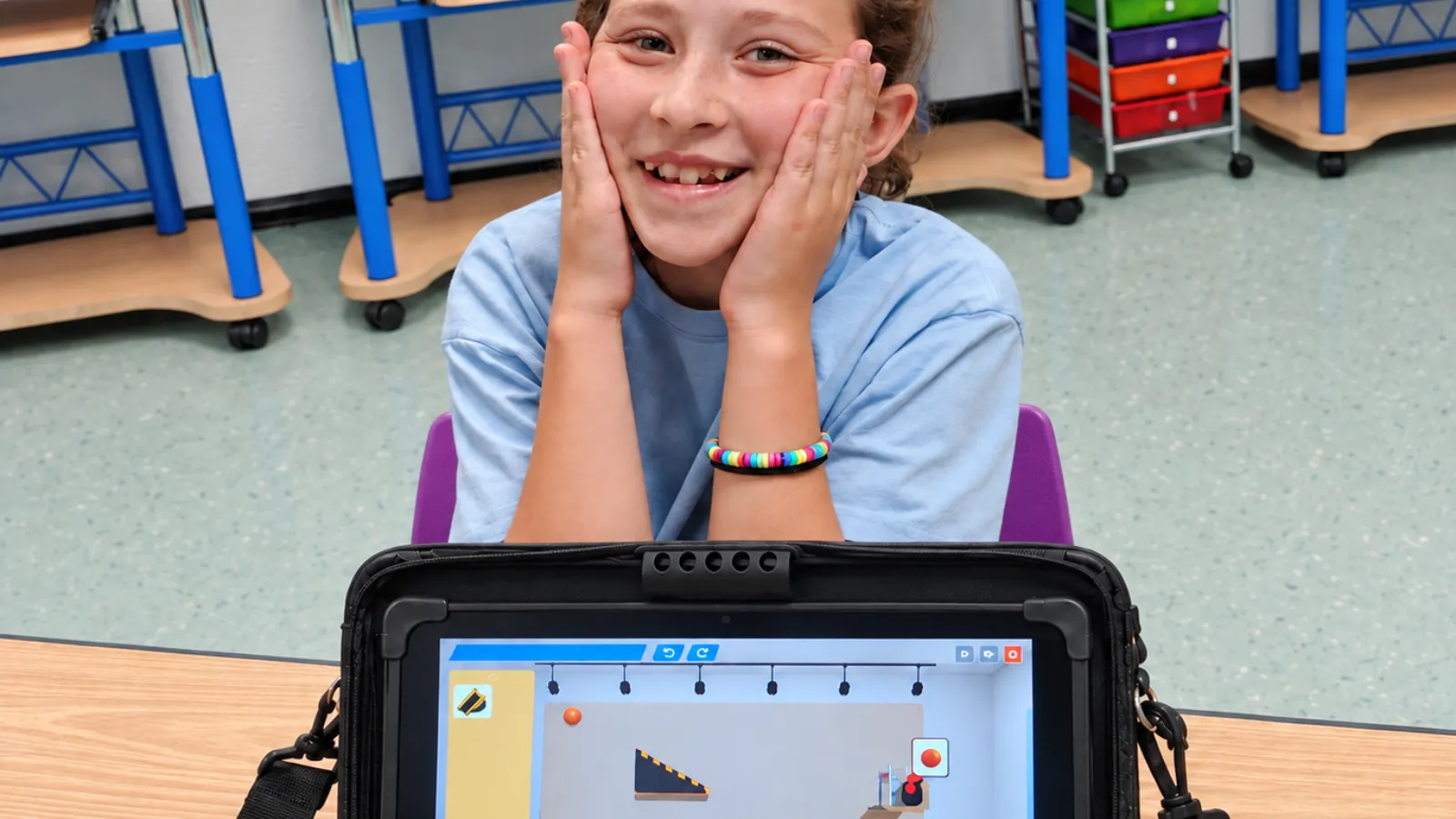
Third grade is the first screen — and the first roller coaster. This is where they move to block coding on the computer, and where I introduce Qweebi through the Roller Coaster. They love it. Honestly, I think they get more of a thrill watching it take off and crash than actually succeeding — once they nail it, they’re already asking “okay, now what?”
Then I bring it back to the table. I take that roller coaster and make them build a real one — a marble run, using the same idea of gravity and kinetic and potential energy. They learned it on the screen; now I want it in their hands. Hands-on is what makes it real.
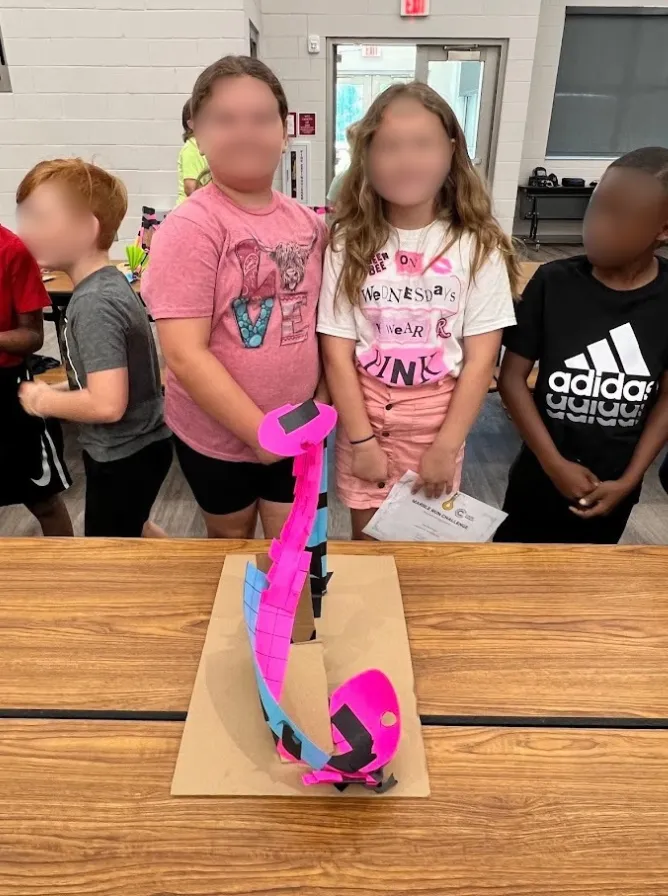 A student’s physical marble run, built after designing a Roller Coaster in Qweebi.
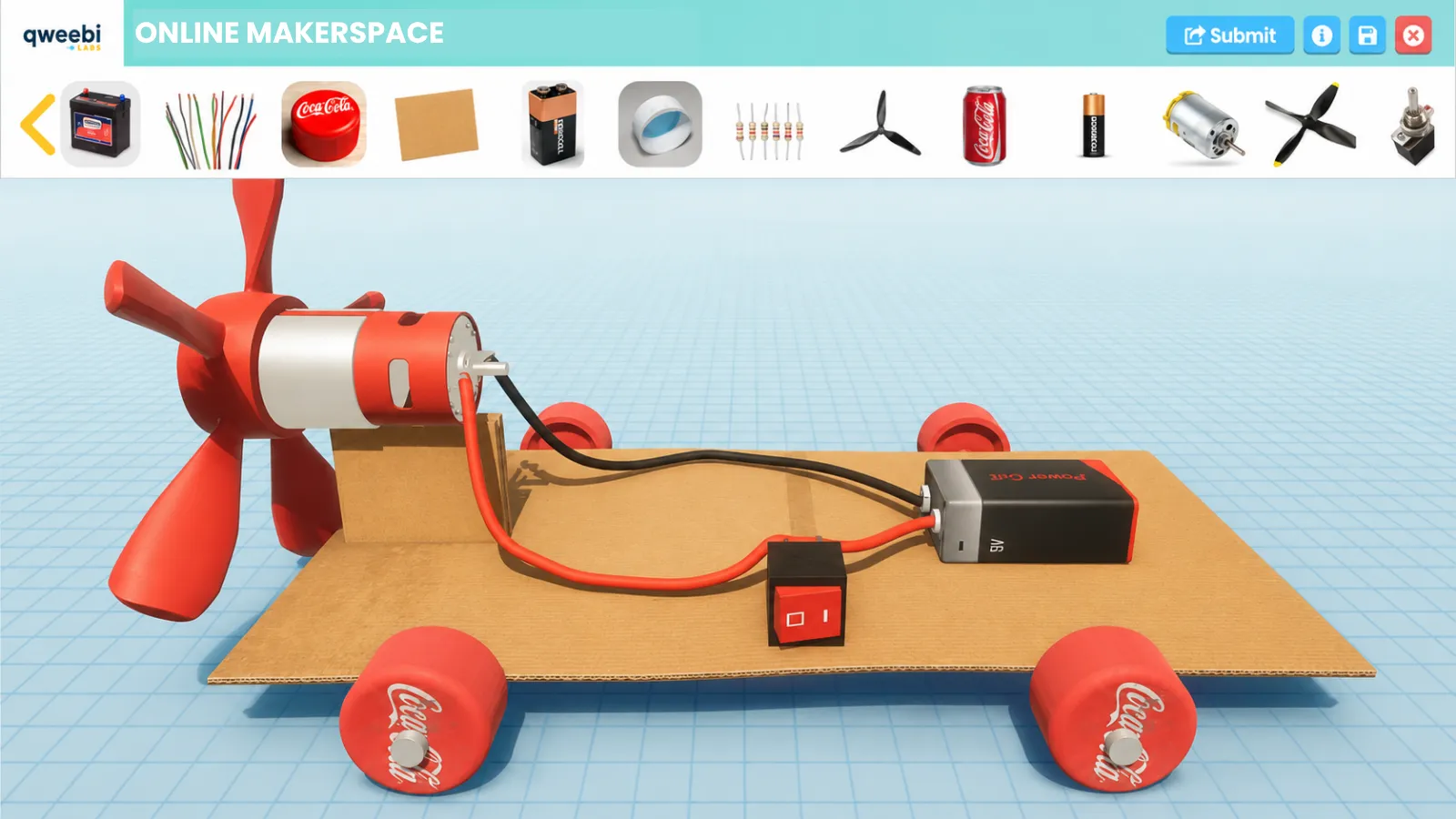
Fourth grade, the coding gets a purpose. Now they’re using block code to guide a robot through a maze. We start with a hands-on sail car — axles, wheels, gravity, friction — and then take all of that virtual, into the Mars Rover on Qweebi. In third grade I go virtual first, then hands-on. In fourth I flip it — hands-on first, then virtual — because by now they’ve got some Qweebi under their belt and I can raise the bar.
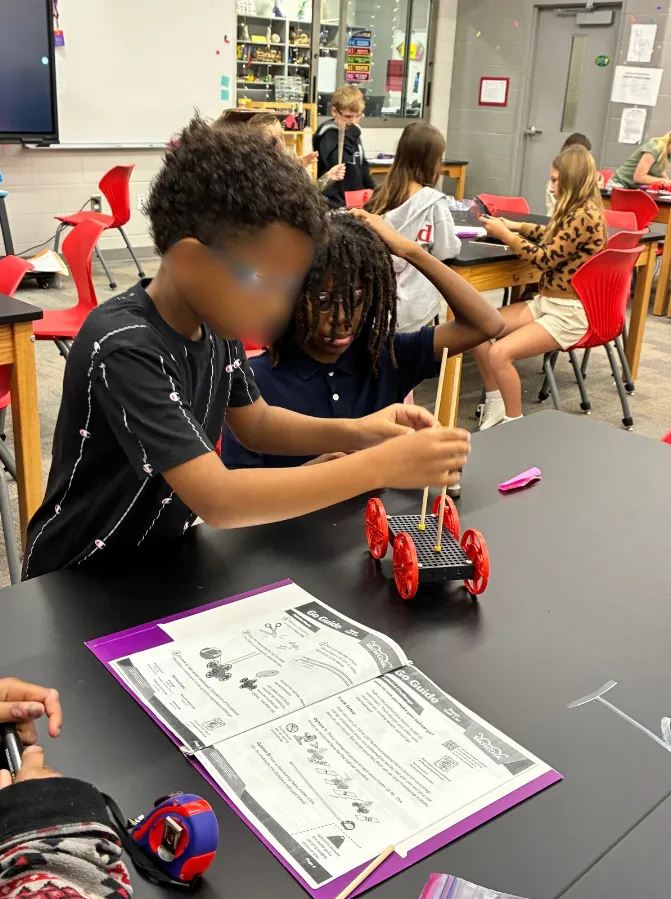 A student’s physical sail car build, built before moving to Mars Rover in Qweebi.
Fifth grade is cardboard, Rube Goldberg, and 3D printing. This is the year of the cardboard putt-golf course — nine holes, every one different. I’ve got four fifth-grade classes, so at any moment there are 45 projects stationed around my room, and I’m threatening children not to touch anything with somebody else’s name on it. It flows right into a Rube Goldberg unit, and they 3D print things they design themselves — hinged creatures, playground equipment. We finish with rocketry. All year, fifth grade is asking me one question: when do we get to blast the rockets? At the end of the year, when it’s hot. That’s when.
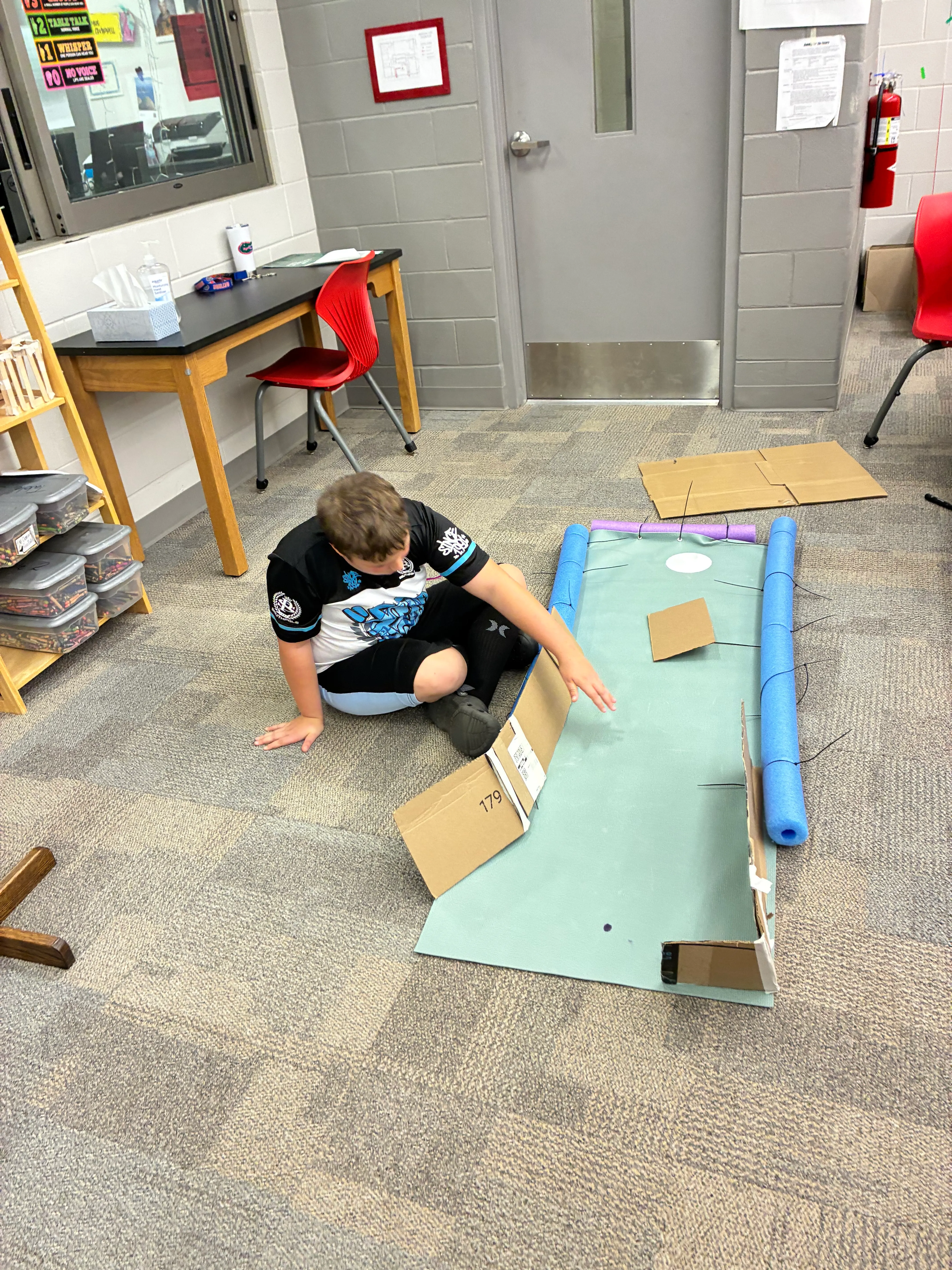 Student-built cardboard mini-golf holes in Lilly Chappell’s classroom.
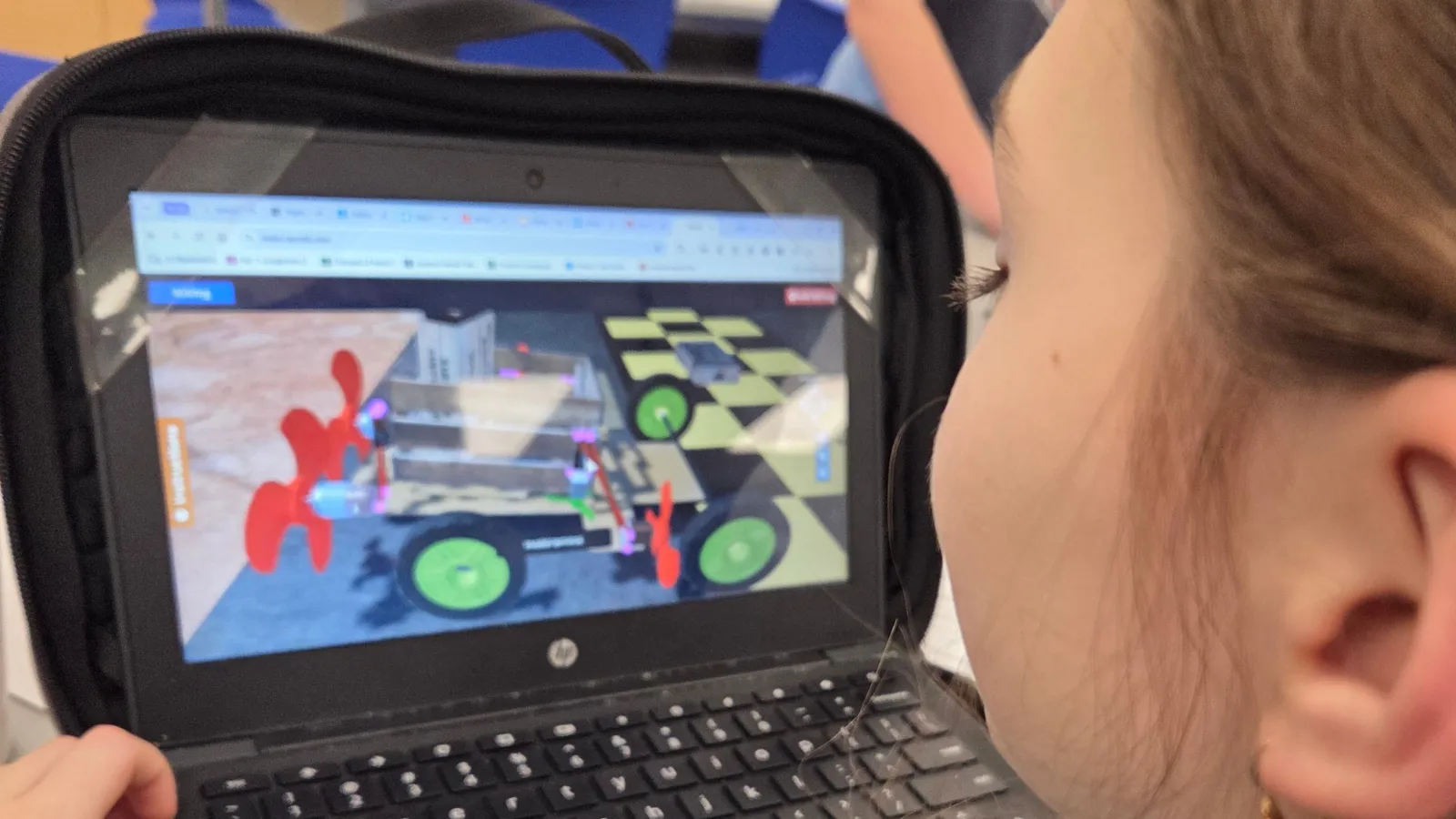
Sixth grade is where it all comes together. They start the year on drones — the vocabulary, the laws, then actual flight. They come back to electricity, which is a lot more complex now. They do stop-motion animation, and the jump from their third-grade attempts to sixth grade is night and day — last year I stood there thinking, oh my goodness, they get it. And they take on the Mars Rover second edition, loading rocks into the box and getting it to the finish line. By now their projects look like middle-school work, not elementary.
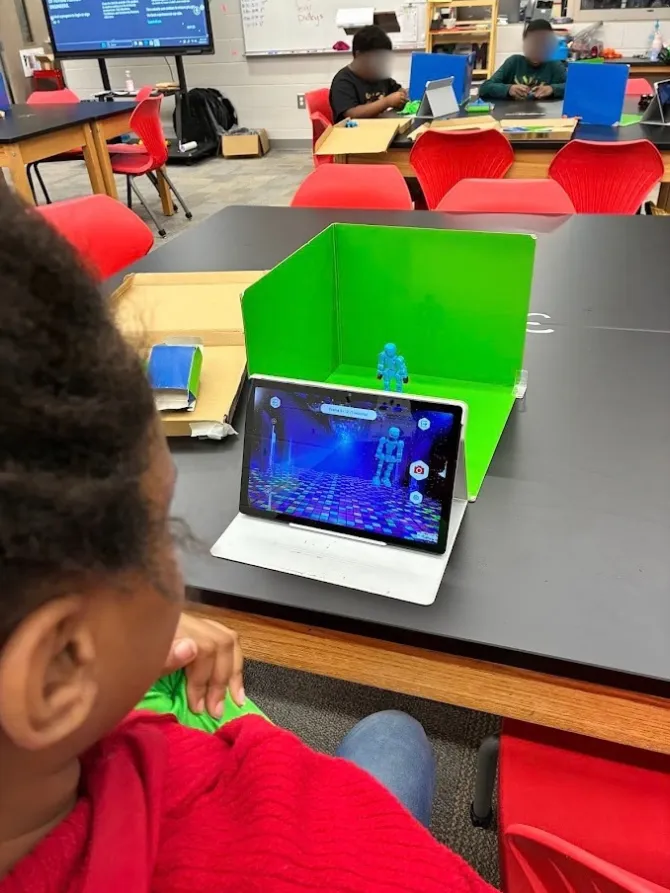 A sixth-grade student’s stop-motion animation setup in Lilly Chappell’s classroom.
Why a virtual makerspace earned its spot in my room
I’m hands-on to my core, so people ask why I lean on a virtual tool at all. A few reasons.
First, money. I love that my kids can manipulate something, crash and burn, make every mistake in the book — and it didn’t cost me an arm and a leg in materials. I can introduce a concept virtually, and once they’re strong at it, move them to the real thing.
Second, it’s a lesson, not a toy. Most kids just want to jump in and play. But I make them understand this is why this works the way it does. Once we’ve done the lessons, then they can go be adventurous in the open workspace on their own. The lesson comes first.
Third, ownership. I have them record themselves explaining their build — what they figured out, what didn’t work — and then they play it back. That ownership matters, because they genuinely want to be successful.
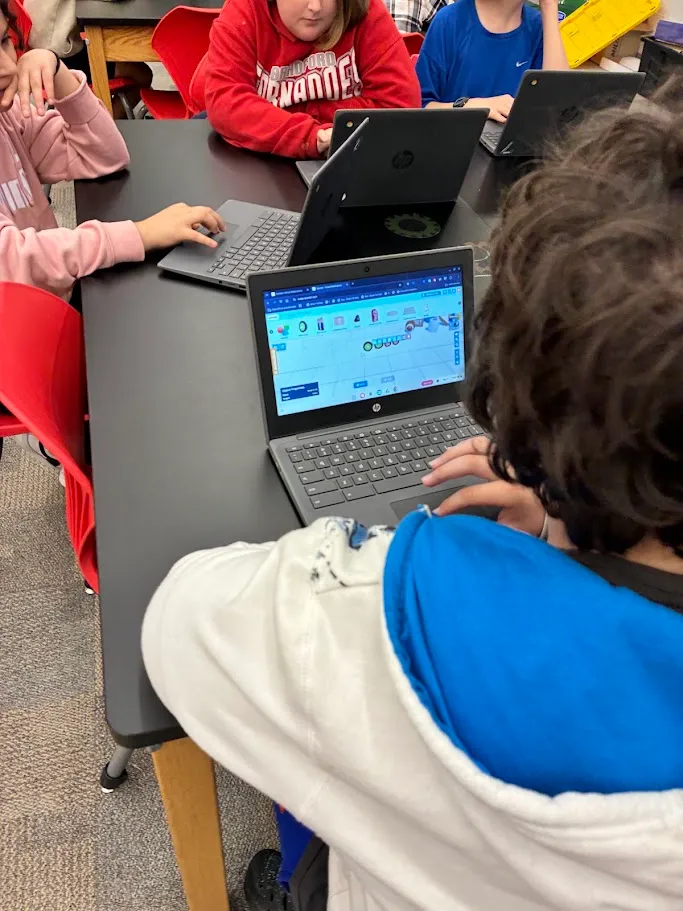 A student recording a show-and-tell video of their Qweebi project.
And honestly? Sometimes I just need the mental break. I suffer with cardboard at the beginning of the year and the end of the year — tape and glue everywhere. Qweebi is wonderful for that middle stretch when I need my room to breathe.
 Play video: Lilly walks through Qweebi in her own classroom.
My kids become the teachers
The best thing that happens in my room isn’t on a screen. It’s the talking.
I start hearing them ask each other, how did you do that? What did you do to make it do that? I love those conversations, because they’re real — they’re helping each other without even realizing they’re helping each other.
Every now and then a kid will say, “Ms. Chappell, they’re cheating off me!” I tell them: no, honey — they think you’re brilliant. They’re trying to steal your idea, not cheat. They didn’t come take your computer. They’re impressed with how you think.
And I’m happy to hand the room over. If I see somebody really nailing it, I’ll say, “hey, if you’re stuck, go see what they’re doing — I bet they’d love to teach you.” The kid looks at me like I don’t want to be the teacher today. But you are, because you’re rocking it.
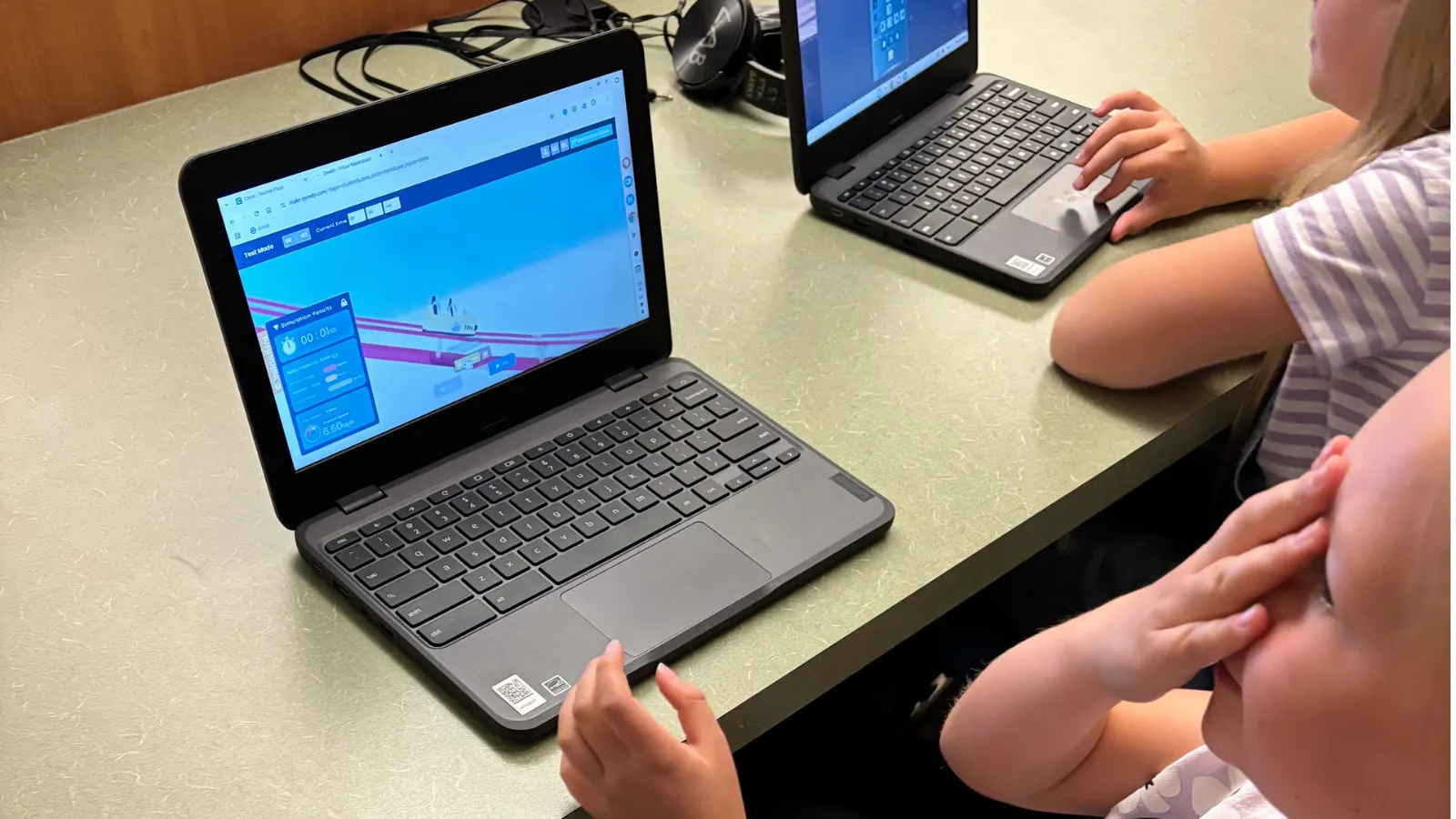
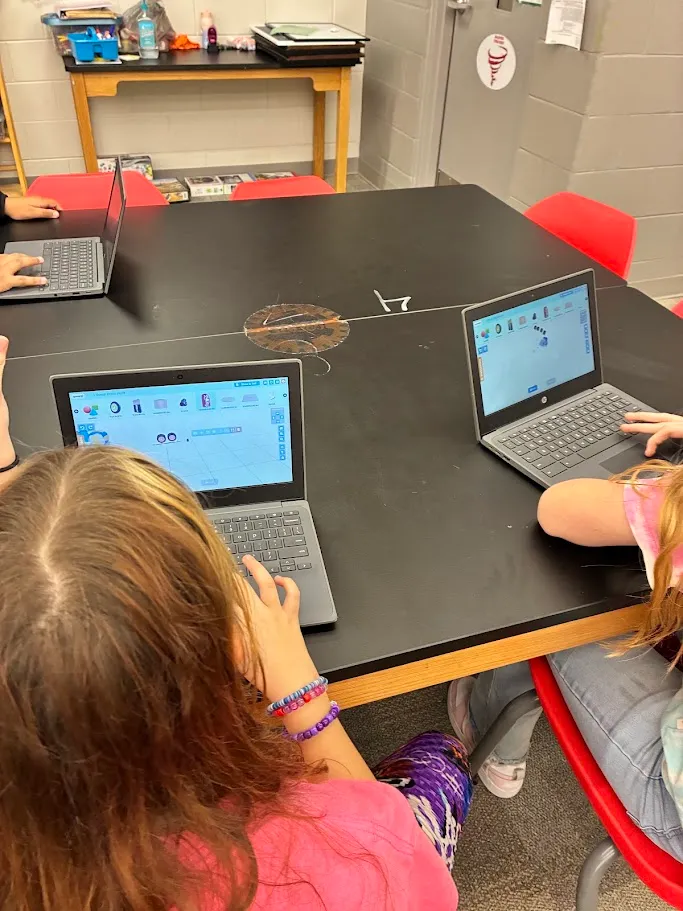 Two students collaborating on a Qweebi project, one helping the other troubleshoot.
It’s not just kid to kid, either. My principal walked through my room last year while kids were working on the Roller Coaster, and she sat down next to one student and asked what he was doing. He explained it right back to her — how to get the car up the hill, why he needed more energy to make it over. Afterward she told me she’d had no idea what he was talking about. But he did. That’s the part I keep coming back to.
I feel it in behavior, too. I have far fewer discipline issues in STEM, because they’re excited to be there. They’re chomping at the bit to get into my room — and that tells me something’s working.
I’ve done every project first — including the one under the couch
I don’t put anything in front of my kids that I haven’t tried myself. Sometimes that gets interesting.
My first year, during COVID, I did a week-long virtual conference and they mailed me a drone. I had to learn to fly it in my living room. I crashed constantly. I flew it under the couch more than once, fighting off the Chihuahua, who was determined to snatch it out of the air. The whole time I’m thinking, please don’t break it, I have no idea what I’m doing.
I’m a better flyer now. But I’m the first to tell my sixth graders they’ll beat me — so many of them are video-game kids that the second I hand them a controller, it’s muscle memory. I tell them straight: you’re going to be a better drone pilot than me ten times over. My job is the vocabulary — are we pitching forward, are we pitching backward?
Since I started teaching STEM, I’ve flown a plane, gone zip-lining, learned to solder, and built a guitar. The opportunities in this kind of classroom are immense. My dad was an electronics engineer, and he says of all his girls, I’m not the one he’d have picked to do any of this. I know — isn’t it crazy? I’m a kid at heart. I love to figure out how things work.
That prep doesn’t come free, though. It happens on my nights, my weekends, my summers. Everything is prep time, and that time is mine.
If you’re walking into an empty room, here’s my advice
I’m the only STEM teacher in my building, and I know how many others are starting exactly where I did. So here’s what I’d tell you.
Don’t limit yourself. Always look for a way to think outside the box.
Build relationships outside the school. This is the real one. Businesses know what kind of employees they want, but they have no idea what the school system is actually doing. Build that bridge. Once they see your work, they want to support it. I’ve gone and spoken to the Kiwanis, the Rotary, the sheriff’s department — anybody I could get in front of. Over six years I’ve raised close to $40,000 for my program. They call me the grant-writing queen.
Sell it. If you sell yourself and you’re convincing, people will support you. If you sit in your four walls and moan that you don’t have what you need, it’s never going to happen.
Step past the imposter syndrome. You’re afraid to not know, afraid to take the step and see if it works. Take it anyway. Everybody knows somebody — in Kiwanis, Rotary, the sheriff’s department, a local business. Use that contact. They expect you to.
I can’t wait to blow people’s minds
I’m a lifelong member of the Florida Association of Science Teachers, and this October I’m presenting Qweebi at our conference — a full hour. Nobody asked me to. I just want more teachers to feel what I feel. If more of them knew about it, I think you’d see them get a lot more confident teaching anything engineering-based — and it doesn’t even have to be a STEM teacher. A physics teacher, a biology teacher — there’s something here for them.
I’ve got about 41 months until I retire, and a principal who’s already nervous about who could possibly take over this room. I’m not rushing. I’m too busy planning my new innovation club and waiting on the solar and windmill projects.
If you take one thing from me, take this: jump right in. See how it goes. It’ll either be great or it’ll be a mess — and either way, you smile and keep going.
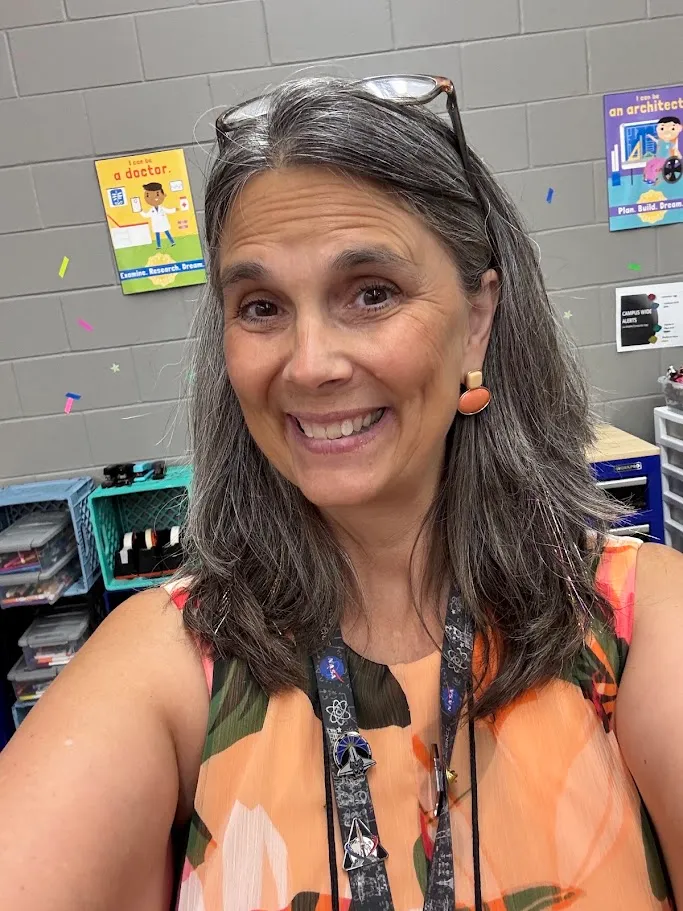 Lilly Chappell, STEM teacher, in her classroom.
What you need
-
Any Chromebooks, Windows, or Mac computers — Qweebi runs in the browser
-
A Qweebi account (several of these projects can be run on the 2 free projects)
-
40-minute class periods — tight, but enough
-
A willingness to ask for help — grants, community partners, or just a colleague down the hall
Ready to bring hands-on STEM to your classroom?
Try 2 Qweebi projects free and see how students design, build, test, and improve, without kits or supplies.