My Rube Goldberg Projects Always Failed. Here's What Finally Worked.
A K-8 teacher on why her Rube Goldberg projects always failed — and how letting students iterate right on screen finally made them work.
I’ve tried to run a Rube Goldberg project in my classroom for years, and it always failed. Not because my students couldn’t understand simple machines — because I never had the space or the time to let every kid actually finish one. Last September, I ran it in Qweebi with every grade from second through eighth, and for the first time, it worked.
My role, for context
I teach Computer Science and Design Thinking — really a mix of that and STEM/STEAM — at Saint Raphael School, pre-K through eighth grade. I see middle school twice a week and K-5 once a week, 45 minutes at a time. I don’t have a district telling me what to cover by when. I know the standards I need to hit and the skills I want to build, and I design my own curriculum around that, changing it every year based on what I think I missed the last time.
Why it kept failing before
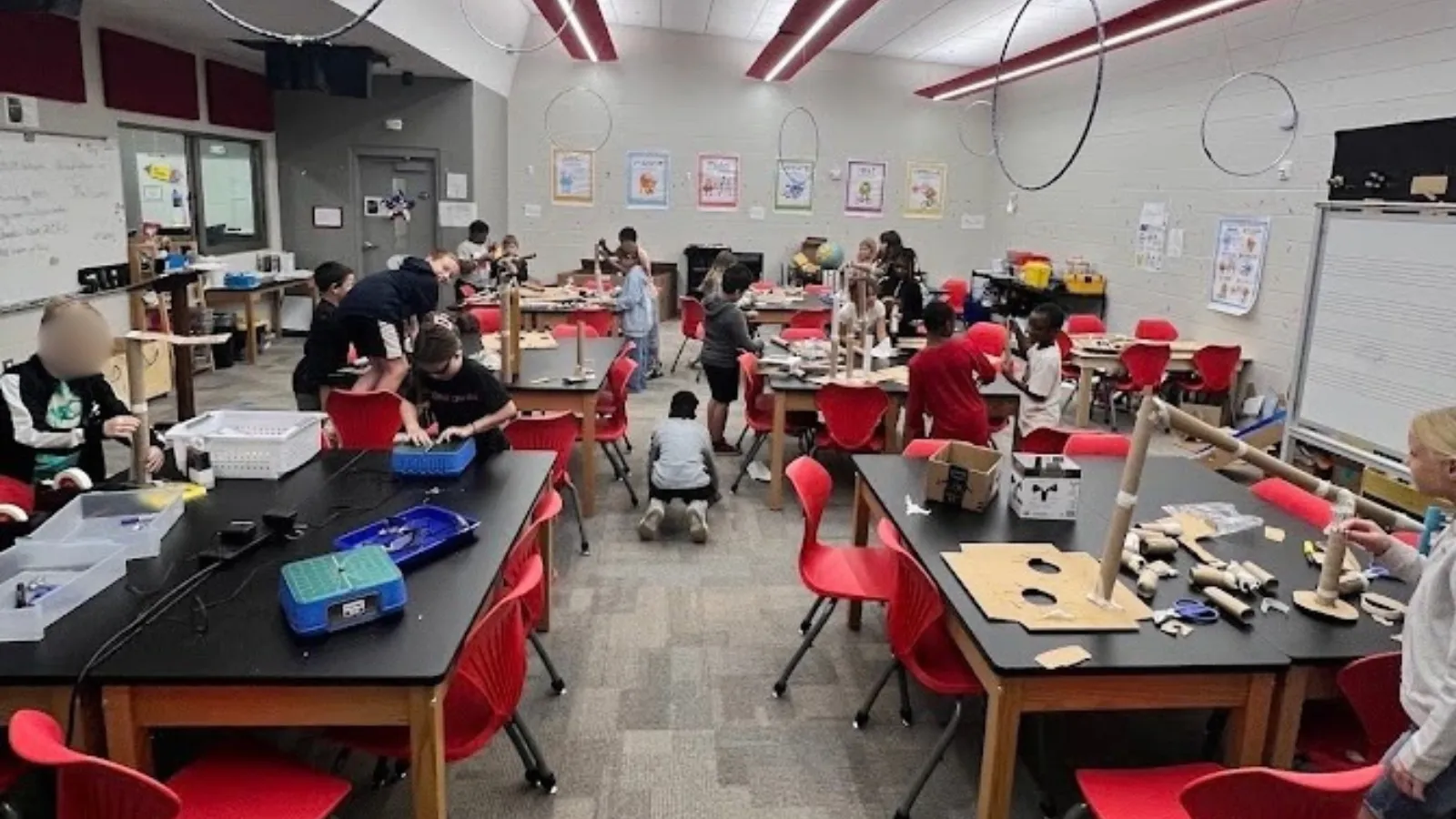
Simple machines are part of every science curriculum, all the way through eighth grade, so Rube Goldberg should have been an easy win for me. It wasn’t. The problem was never the concept — it was logistics. I don’t have the space to let every student in a class build a full Rube Goldberg machine, and I don’t have the time either. Forty-five minutes isn’t enough, and the next grade is waiting at the door. I’ve had to tell kids mid-build: pick up your machine, put it away, the next class is coming in. Wait, I didn’t finish.
I even had the space and time once — we ran it every day for two full weeks at STREAM camp, nothing else on the schedule. And I still don’t think those kids actually understood how the simple machines connected to each other. They could build something, but they couldn’t see the cause and effect clearly enough to explain why it worked.
What changed
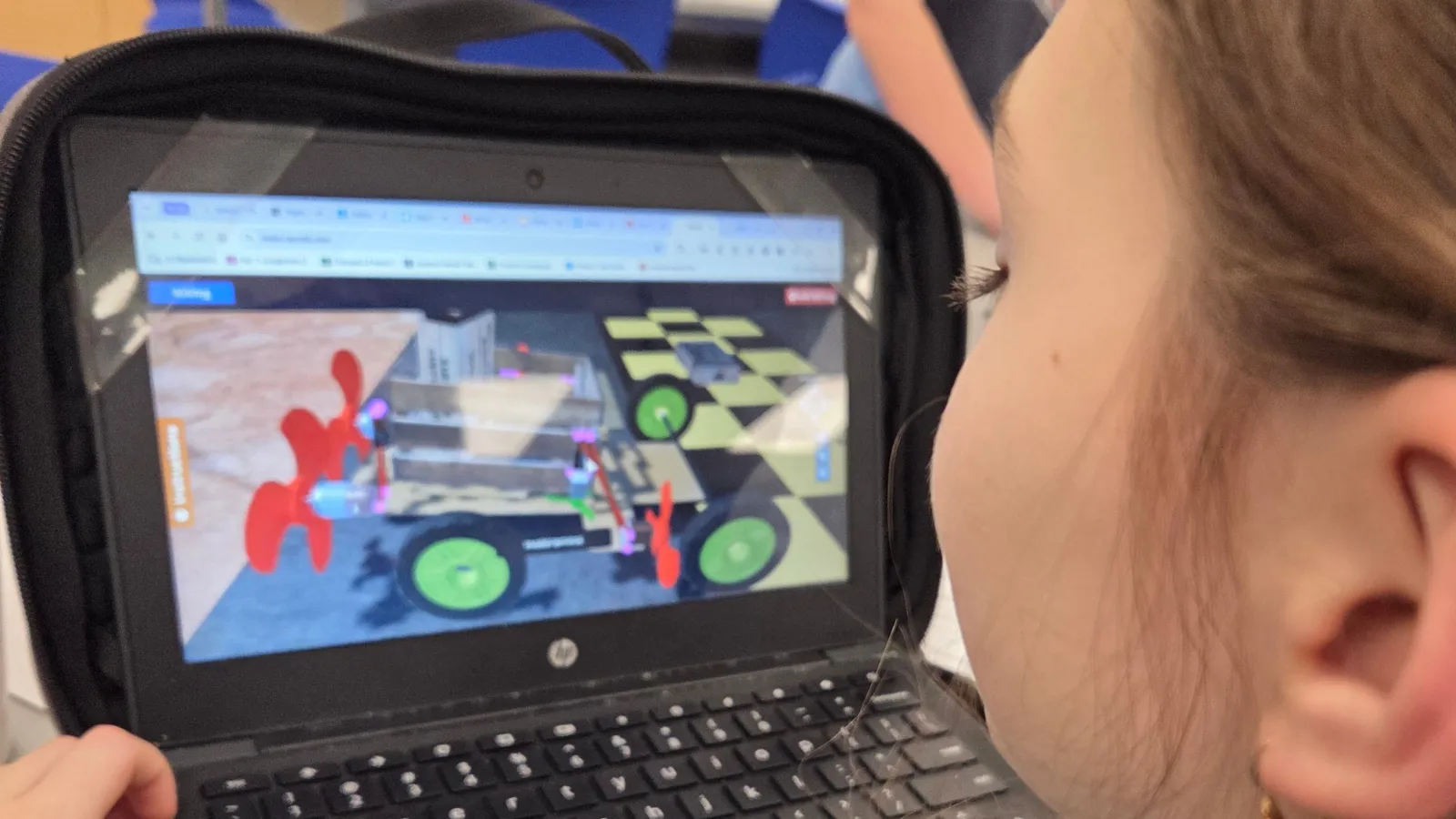
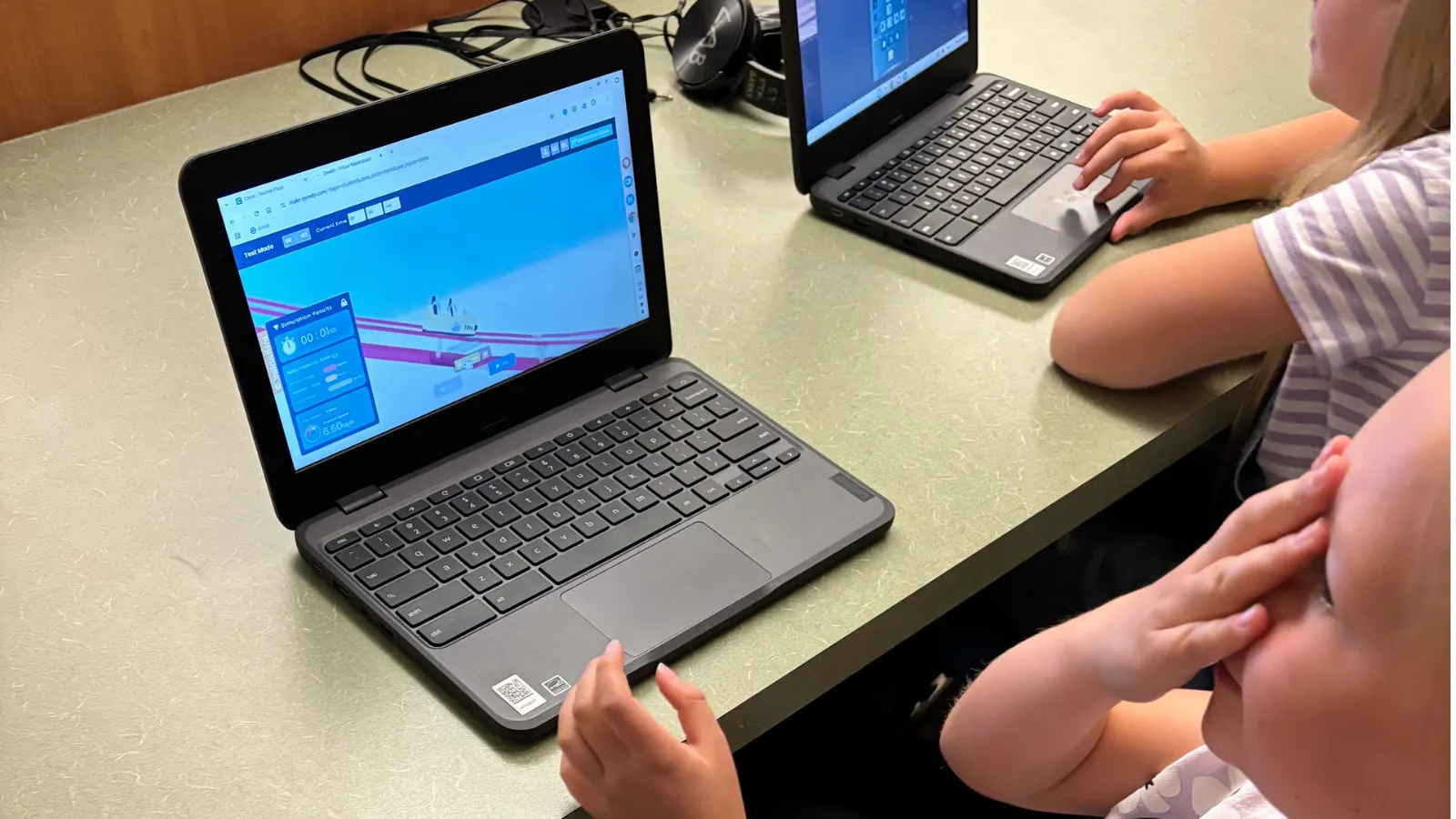
Last September, I ran Qweebi’s Rube Goldberg project with every grade from second through eighth. For the first time, my students could actually finish, test what they’d built, and see immediately why it worked or didn’t. If something broke, they didn’t lose the whole period rebuilding it — they just tried again.
That’s what ticks the box for me: not just the science standards, but watching a student go from “I can’t do this, this is silly, I don’t want to do this” to trying again and again, because trying again costs nothing here. The kids who normally give up the fastest were the ones I watched get pulled in hardest.
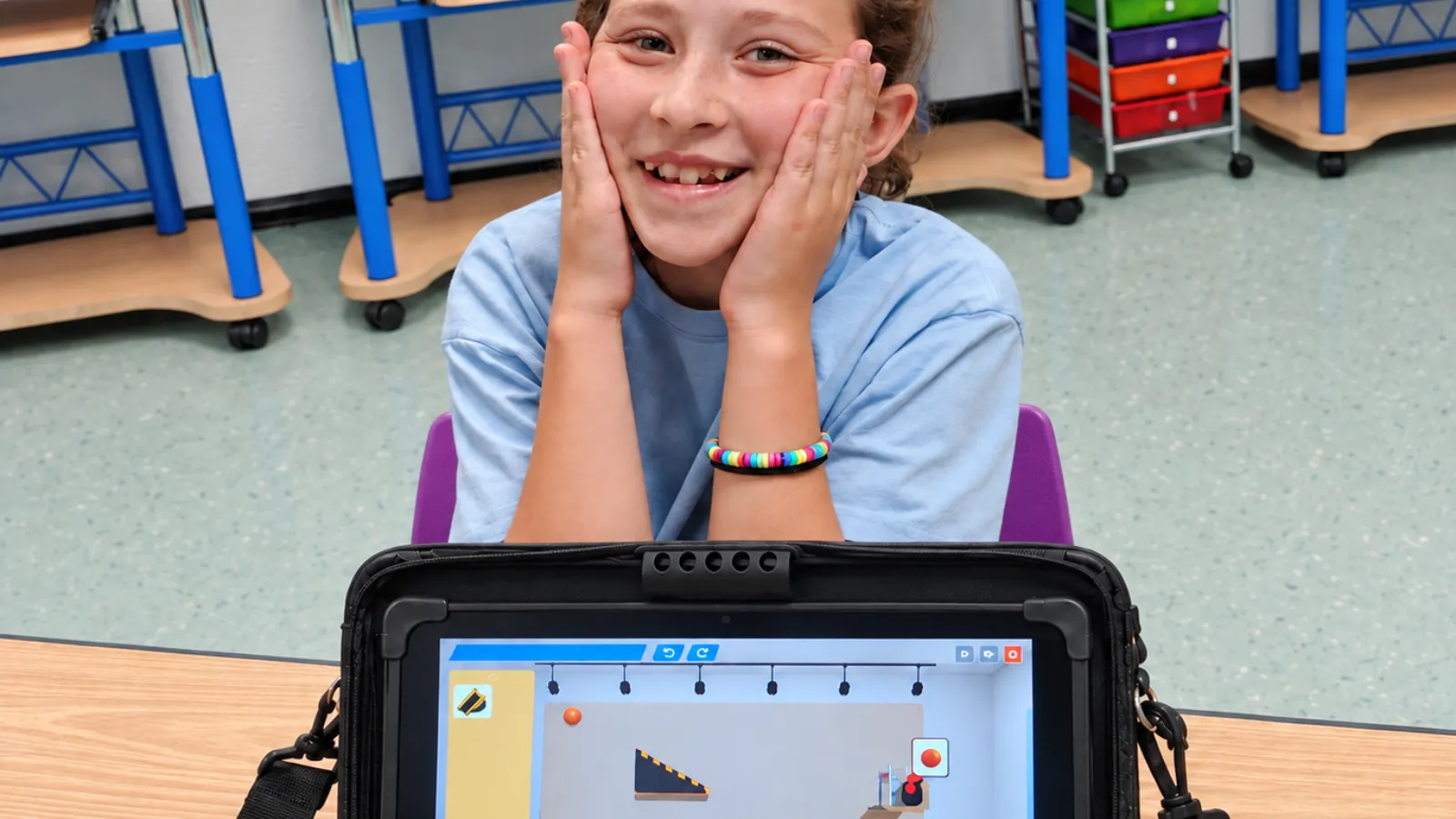
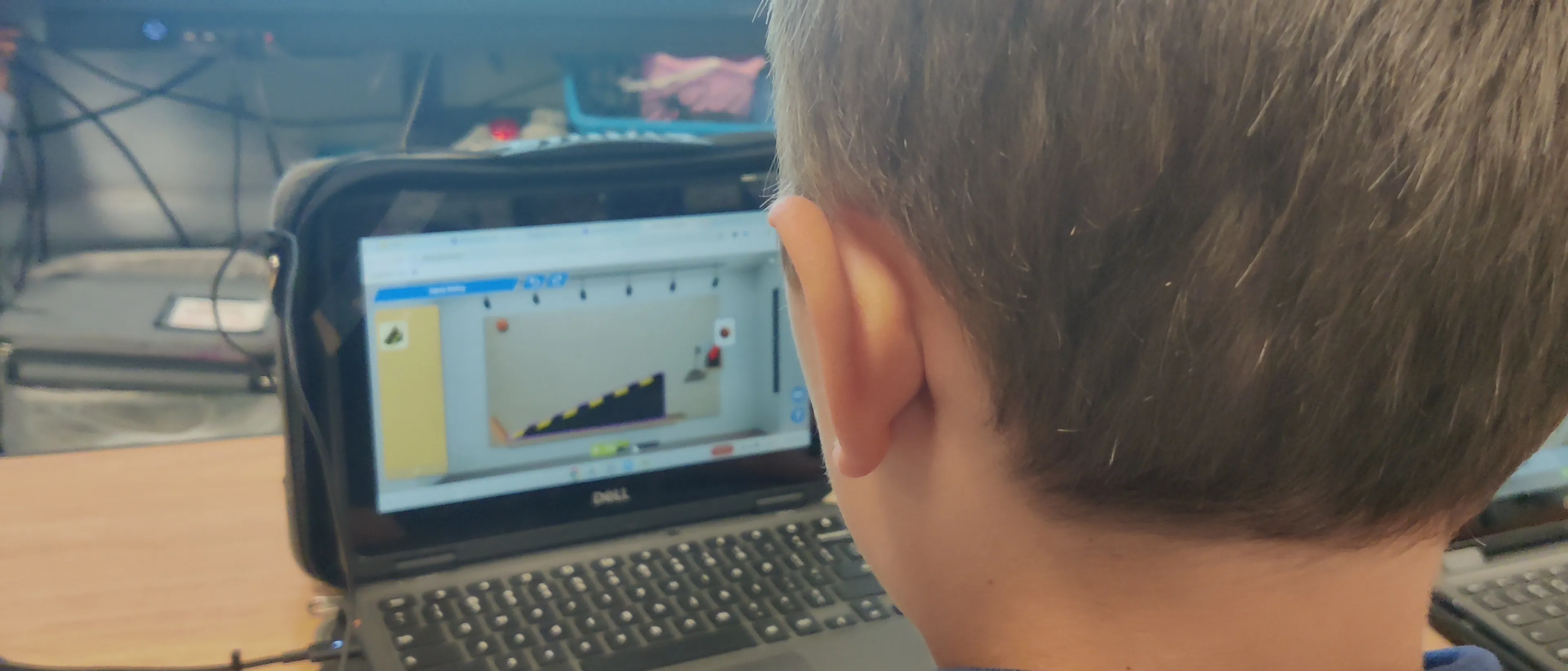 A student building a Rube Goldberg machine in Qweebi, testing a ramp-and-marble sequence.
The moment I keep coming back to
One moment really captures how learning works in my classroom. A student was working through a Rube Goldberg challenge in Qweebi, frustrated because his machine simply would not work the way he wanted it to. Instead of fixing it for him, I helped him slow down — look at one small step at a time, make one change, test it, then try again. Little by little, he started to see that failure wasn’t the end of the process. It was part of the process.
When the machine finally worked, all of that frustration disappeared. He leaned back like it had been easy all along and casually said something along the lines of, “Easy math.” That moment still makes me smile — it captured the shift from “I can’t do this” to “Of course I can do this.”
 Play video: A student iterating on his Rube Goldberg build in Qweebi until it finally clicked.
That’s one of the things I value most about using Qweebi in a virtual environment. Students can experiment, fail safely, reset, make small changes, and immediately test their thinking again. The iteration happens right in front of them, and sometimes the biggest learning isn’t the finished machine at all. It’s the moment when a student realizes that a difficult problem can become manageable when you break it into smaller pieces and keep going.
What I want my students to walk away with
Confidence that they understand the design thinking process, and that it’s okay to fail and keep trying — whether that’s coding, engineering, or anything else. If a kid can look at something complicated, a plane, a machine, a problem, and think “I understand how this works, I can do this” instead of feeling intimidated by it, I’ve done my job. That’s the whole point of the program, from kindergarten through eighth grade.
How I ended up presenting at conferences
I’d gone to ISTE every year since 2005 and always wondered if I could be the one presenting instead of attending. Vivek, Qweebi’s co-founder, is the one who actually gave me the confidence to try — he sat with me for hours teaching me how to actually write a conference proposal. Nobody had ever done that for me before. My first attempt, in Denver, didn’t go how I expected — a huge room, 60 people, a format that didn’t fit how I actually work. I was ready to give up. My family talked me back into it, and I switched to posters and smaller workshops, something more one-on-one. I like to say: he was the catapult, I’m the stone.
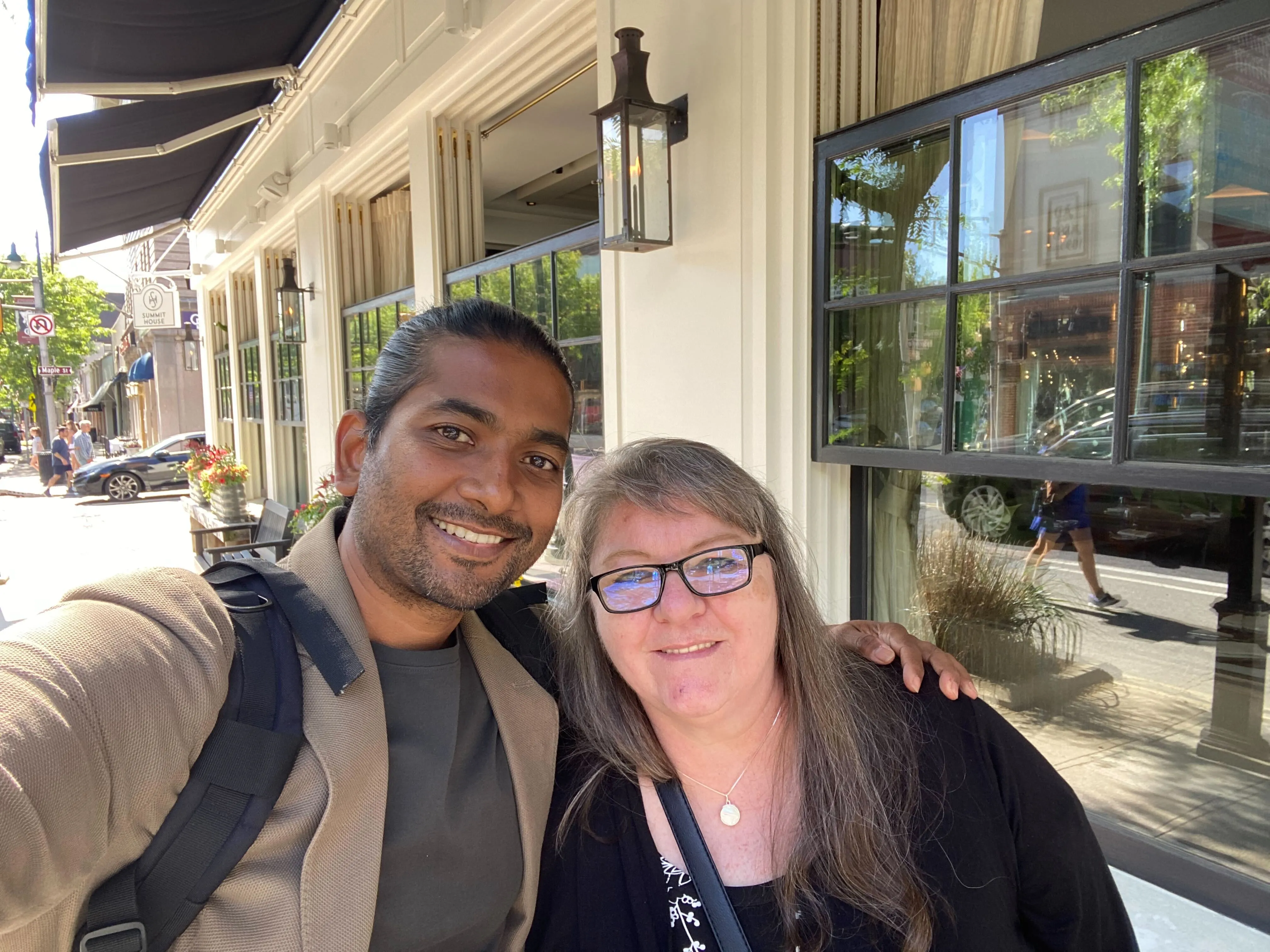 Kim Smith with Qweebi co-founder Vivek, who helped her write her first conference proposal.
I’ve presented Qweebi at six-plus conferences this year alone. When teachers ask me what it is and why they should try it, I tell them the same thing every time: there are things you simply can’t do in a regular classroom that you can do in Qweebi. You can’t measure the speed of a car your students built unless you’re in a physics lab. You’re not going to hand a third grader a $9 motor and a fan and let them wire it up for real — but in Qweebi, they can, they learn the actual vocabulary for what they’re doing, it “blows up,” and they try again without the cost or the risk.
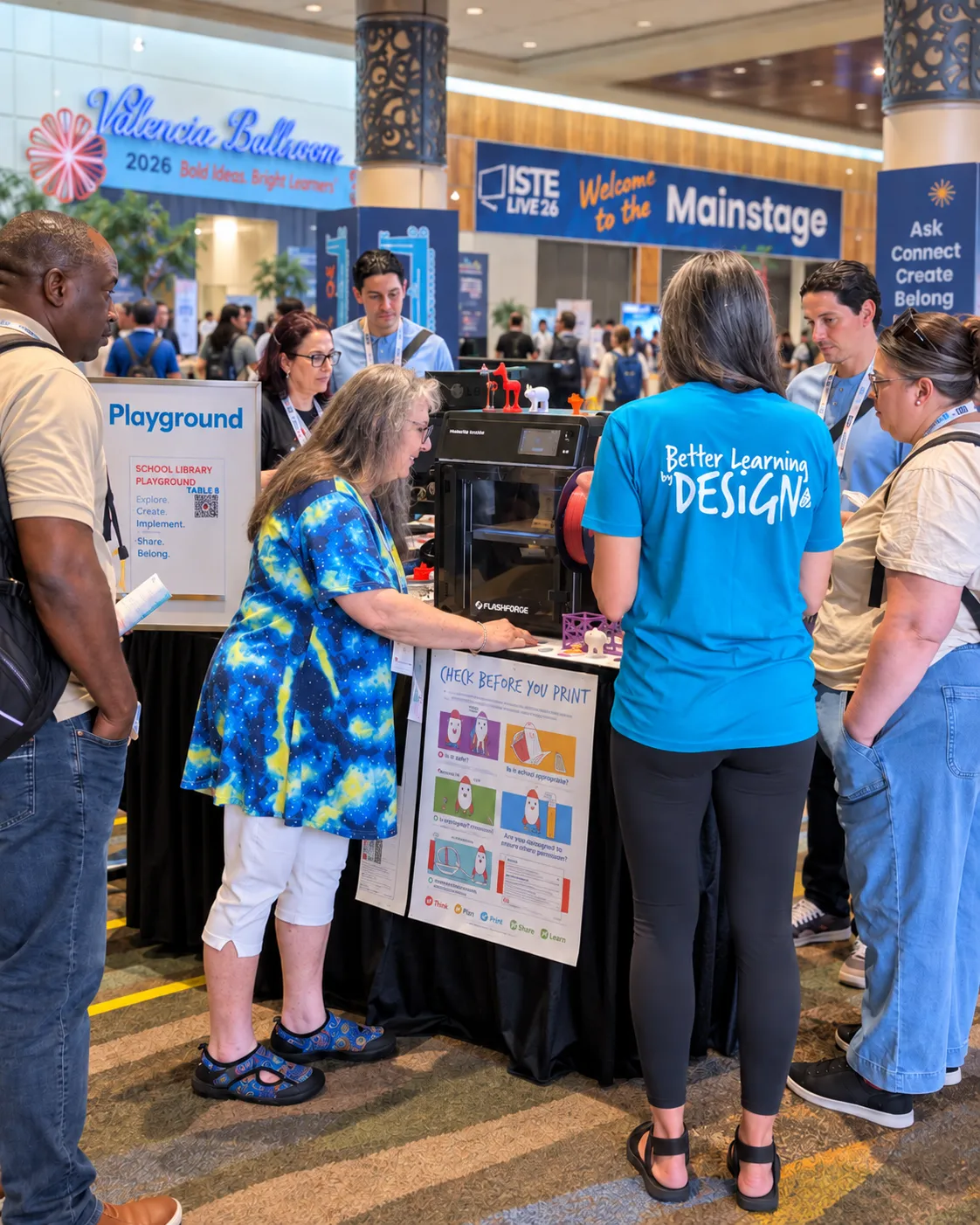 Kim Smith presenting Qweebi and Maker’s Empire at the ISTE Live conference.
My advice to a teacher who’s never presented
Believe you have something valuable before anything else. Teachers underestimate how little other people know, and how much your classroom experience is actually wanted. You don’t have to be a polished speaker — you just need something real to show. Start small: a state summit, a local conference, not ISTE on day one. If you don’t get picked the first time, keep trying. You already present every single day in front of a room full of kids. You’ve got this.
My advice on working with the companies whose tools you use
Negotiate. If you don’t have the budget, offer your time instead — ask to run a pilot, ask if they have an ambassador program, ask if there’s a rate you haven’t been told about. I never accept the first price. One company quoted my school $2,000 for a product; I pushed back, and it turned out they had an unadvertised small-school rate — I paid $250. I got a free 3D printer out of Maker’s Empire the same way, plus discounted software access from a few others. Companies won’t always say yes, but asking costs nothing, and it works more often than teachers expect.
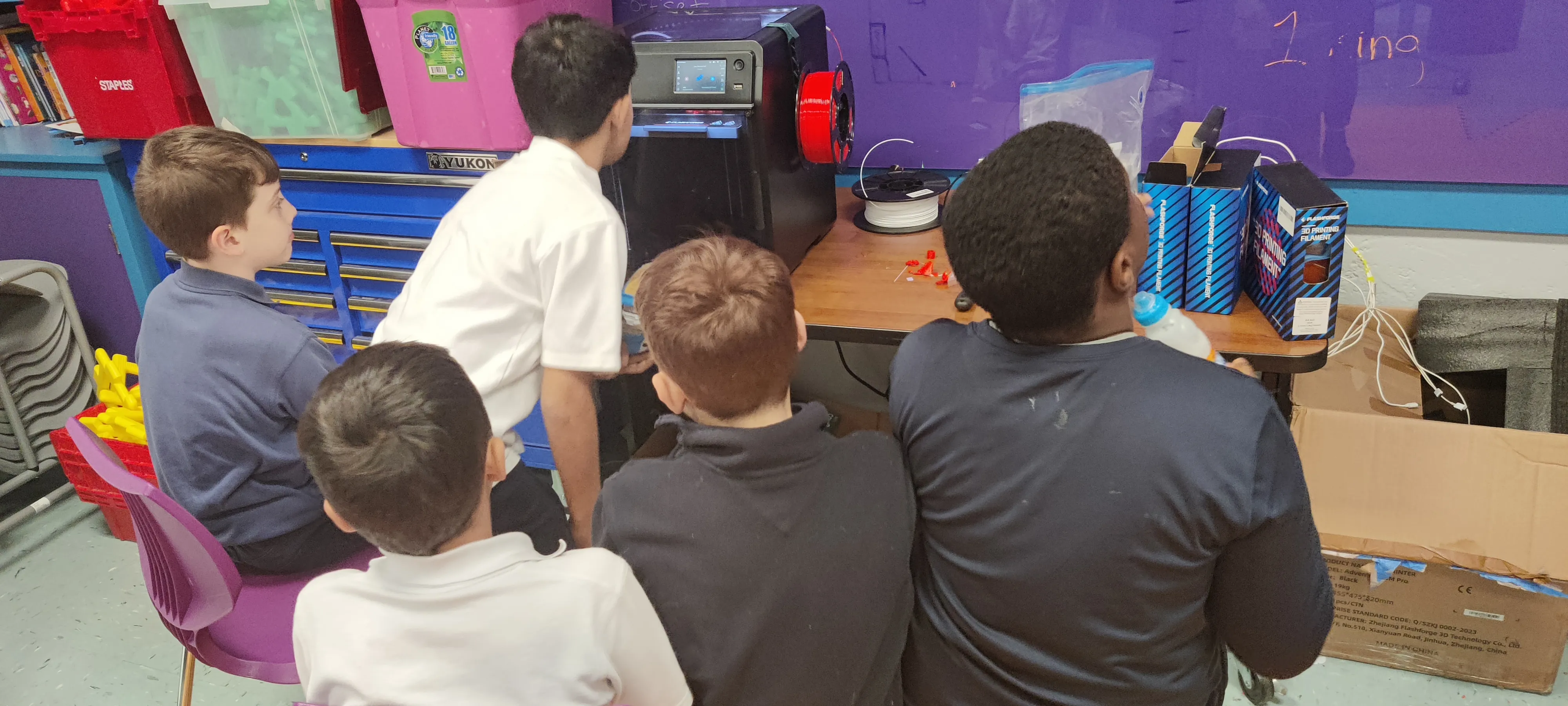 Students watching a 3D printer Kim Smith negotiated for her classroom.
What you need
-
Any Chromebooks, Windows, or Mac computers — Qweebi runs in the browser
-
A Qweebi account (several of these projects can be run on the 2 free projects)
-
45-minute class periods
-
A willingness to negotiate with the companies whose tools you use
Ready to try the Rube Goldberg Machine I Project in your class?
Students design, build, test, and improve in Qweebi, with minimal prep and no supplies.